You’re staring at a blank page, fingers hovering over the keyboard, wondering which AI writing tool will actually help you finish that novel you’ve been dreaming about. Should you go with Sudowrite vs ChatGPT? Both promise to revolutionize your writing process, but they approach creativity from completely different angles. We’ve spent weeks testing both platforms to give you the honest comparison you need before investing your time and money.
Here’s what we discovered after comparing these two AI writing assistants:

Sudowrite is specialized AI for fiction, screenplays, and stories.
Sudowrite is an AI writing platform specifically designed for fiction authors and creative storytellers. Built by novelists Amit Gupta and James Yu, it uses multiple advanced language models including Claude, GPT-4, and its proprietary storytelling models to help writers craft novels, screenplays, and short stories. The platform features specialized tools like Story Bible for plot development, Canvas for visual brainstorming, and style-matching capabilities that learn your unique voice.
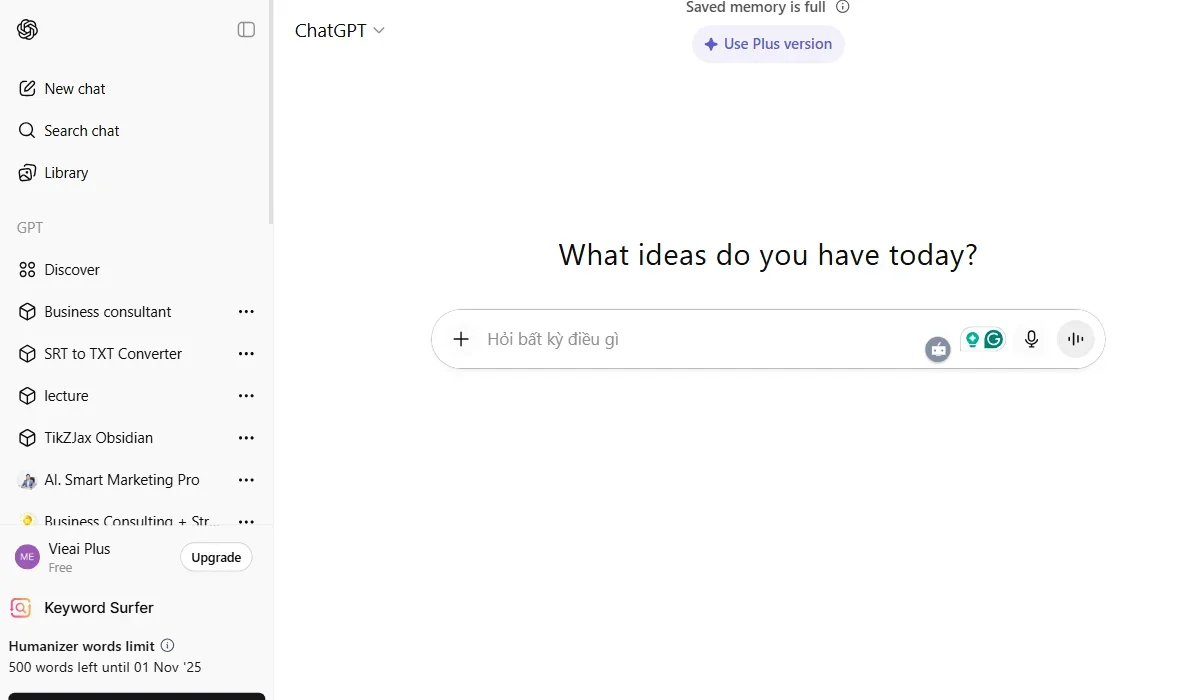
ChatGPT is a general-purpose conversational AI assistant.
ChatGPT is OpenAI’s conversational AI assistant designed for general-purpose tasks across writing, research, coding, and problem-solving. It uses advanced language models like GPT-4o and o1 to respond to prompts through a chat interface. While highly versatile for blog posts, academic writing, and quick content generation, ChatGPT lacks the structured creative writing tools that fiction authors typically need for long-form storytelling projects.
Before diving deep into the details, let’s understand how these tools stack up. Here’s how they compare across five critical dimensions that matter most to writers:
Fast Comparison Table
| Feature | Sudowrite | ChatGPT | Winner |
| Story Organization | Story Bible, Canvas, chapter structure | Conversation-based, no native organization | Sudowrite |
| Prose Generation | Fiction-optimized with style matching | General-purpose with prompt engineering | Sudowrite |
| Brainstorming Tools | Dedicated Brainstorm & Canvas features | Conversational brainstorming | Sudowrite |
| Content Freedom | More permissive for mature fiction | Stricter content moderation | Sudowrite |
| User Interface | Dedicated writing app with structured tools | Simple chat interface | Sudowrite (for fiction) |
Sudowrite’s Story Bible transforms how fiction writers organize their projects. This feature guides you step-by-step from initial concept to detailed outline, then helps you flesh out chapters with consistent character development and plot progression. The system remembers your characters, settings, and plot threads across the entire manuscript, ensuring continuity throughout your novel.
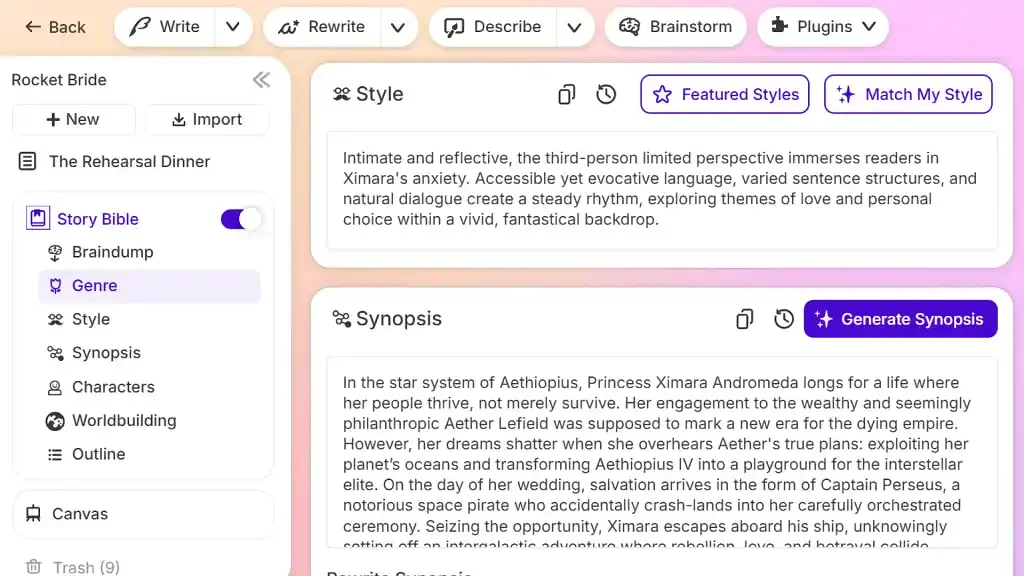
Story Bible organizes fiction projects, ensuring continuity.
ChatGPT, by contrast, relies on conversation history and optional memory features that don’t provide dedicated story structure. You’ll need external tools like Notion or Scrivener to organize your fiction project when using ChatGPT. For novelists managing complex narratives with multiple character arcs and intricate worldbuilding, Sudowrite’s integrated approach eliminates the friction of switching between applications.
Winner: Sudowrite
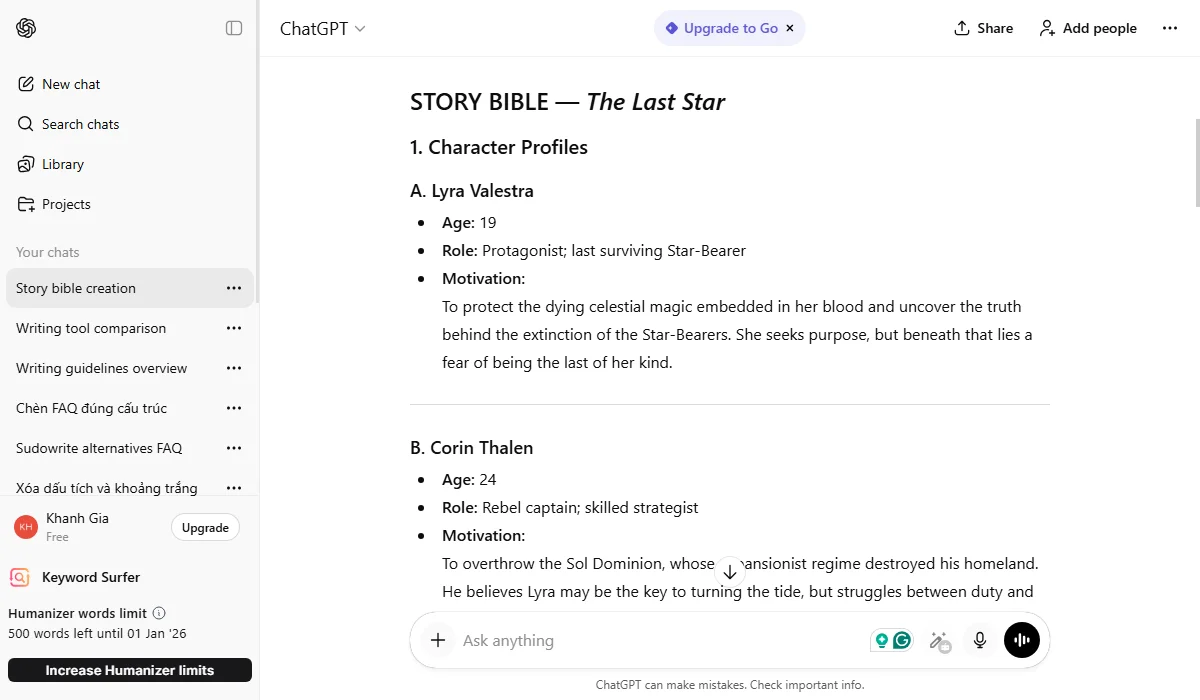
ChatGPT lacks a dedicated story structure for complex narratives.
Sudowrite excels at generating fiction prose that actually sounds like you. Its Write feature analyzes your existing text to understand your voice, tone, and narrative style, then suggests the next 300 words with multiple options to choose from. The platform’s Rewrite tool takes specific direction seamlessly, letting you refine sentences until they match your vision perfectly.
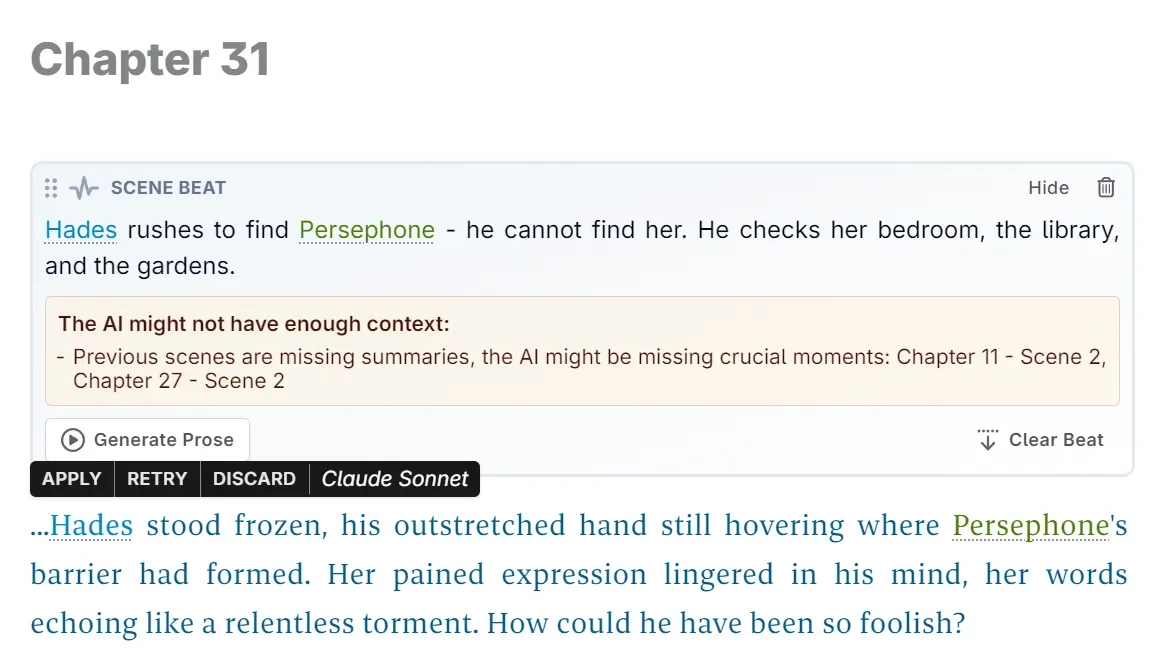
Sudowrite excels at prose generation and voice matching.
ChatGPT can generate prose and mimic styles, but it requires careful prompt engineering and often produces what writers call “averaged-out” writing that lacks distinctive voice. When we tested both platforms with the same scene, Sudowrite captured the author’s quirky character voice and pacing rhythm, while ChatGPT produced competent but generic prose that needed significant editing to feel authentic.
Winner: Sudowrite
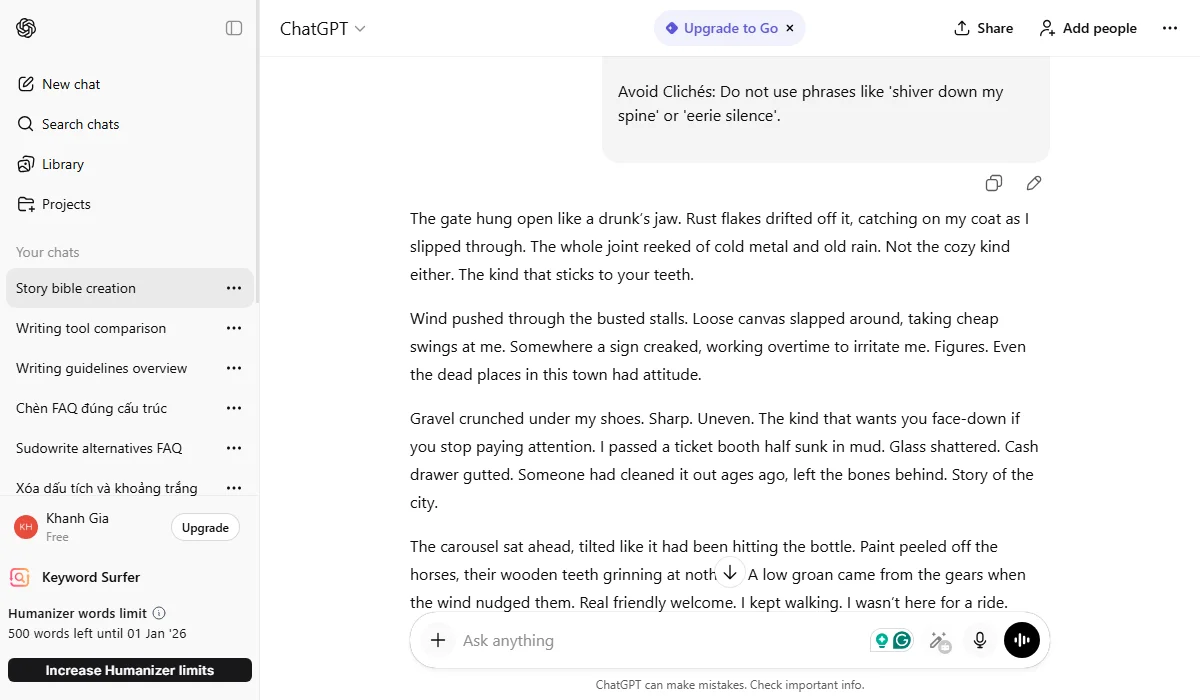
ChatGPT prose is often generic, lacking a distinctive voice.
The dedicated brainstorming ecosystem in Sudowrite changes the creative planning process entirely. Canvas provides a visual workspace where you can explore plot points, character secrets, and alternative story directions with AI assistance. The Brainstorm feature generates endless ideas for character names, magic systems, or plot twists, learning from your preferences and selections to deliver increasingly relevant suggestions. It even includes a Visualize tool that creates artwork from your character descriptions.
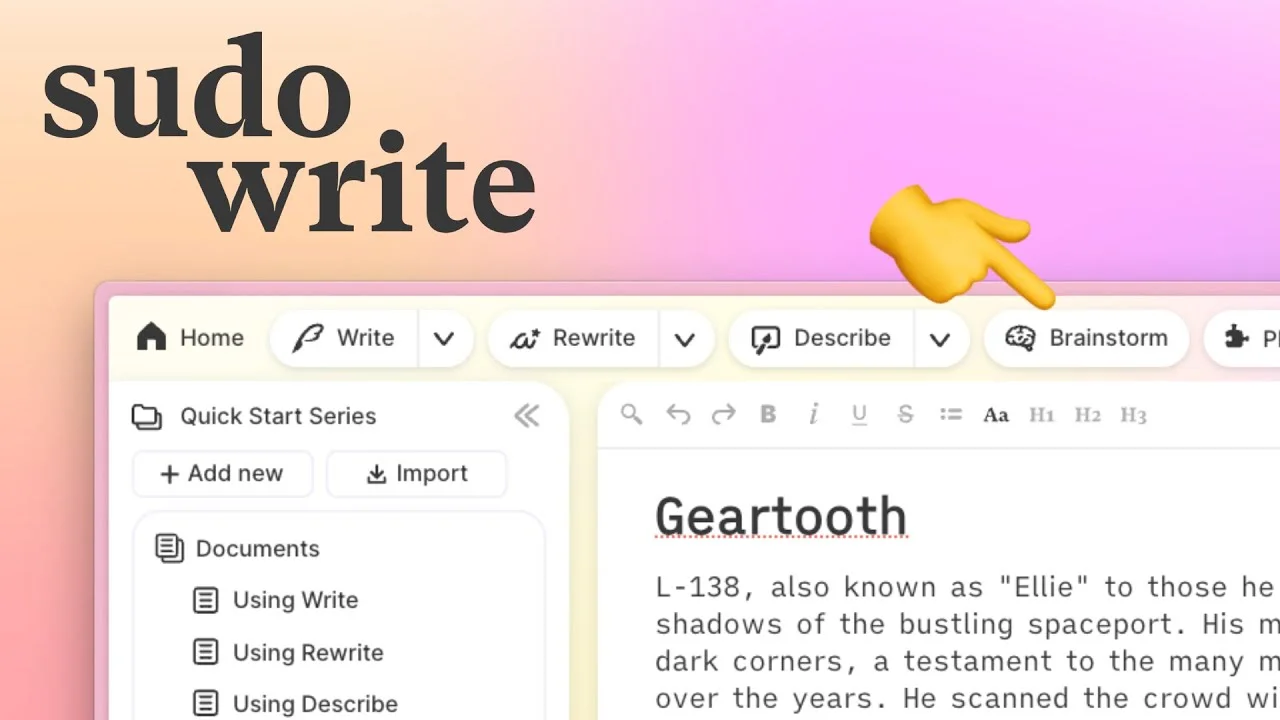
Sudowrite Canvas aids visual, AI-assisted brainstorming.
ChatGPT handles brainstorming through conversation, which works fine for quick ideas but lacks the visual organization and persistent context that long fiction projects demand. When developing a fantasy novel with intricate world-building, Sudowrite’s Canvas let us map relationships between kingdoms, track magical rules, and explore “what if” scenarios without losing our place.
Winner: Sudowrite
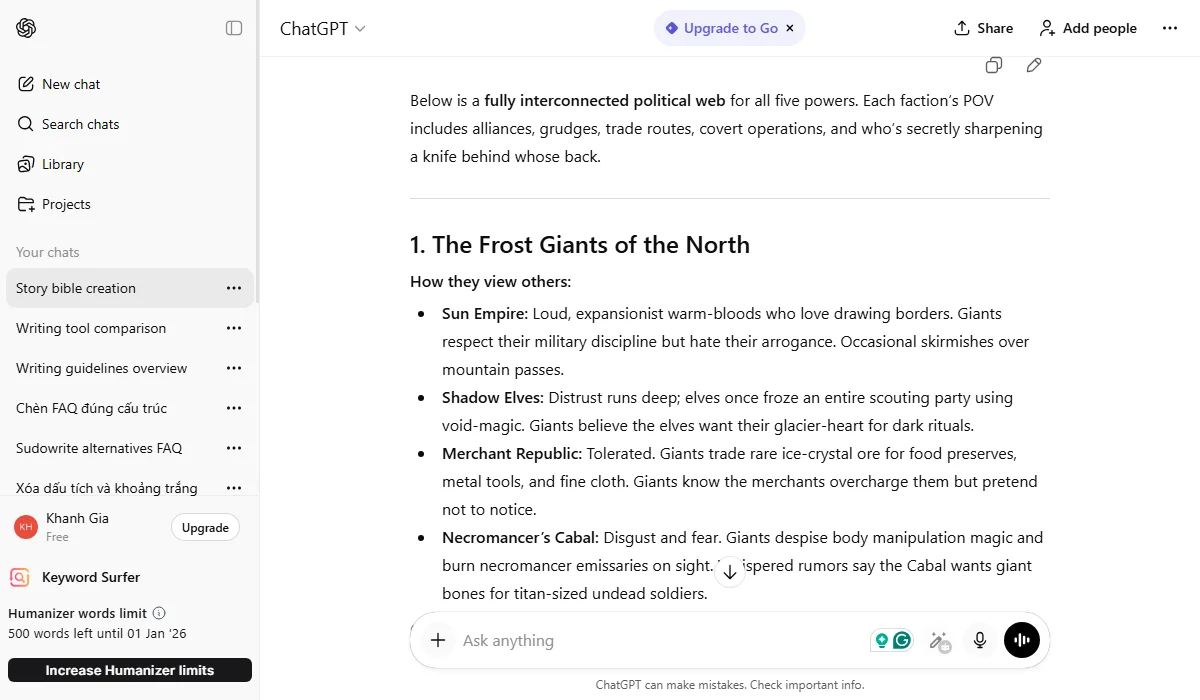
ChatGPT brainstorming is conversational, lacks visual context.
Content restrictions become critical when writing mature fiction themes. Sudowrite takes a more permissive approach, understanding that fiction often explores complex, adult themes including violence, romance, and moral ambiguity. The platform is designed for storytellers who need creative freedom within legal boundaries.
ChatGPT implements stricter content policies that sometimes flag or refuse to generate scenes involving violence, mature relationships, or controversial topics—even within clearly fictional contexts. Writers working on thrillers, romance novels, or literary fiction with difficult subject matter frequently hit ChatGPT’s guardrails. During our testing, ChatGPT refused to continue a murder mystery interrogation scene, while Sudowrite handled the same content appropriately. For authors writing commercial fiction across various genres, Sudowrite’s approach respects creative boundaries while maintaining responsible AI use.
Winner: Sudowrite
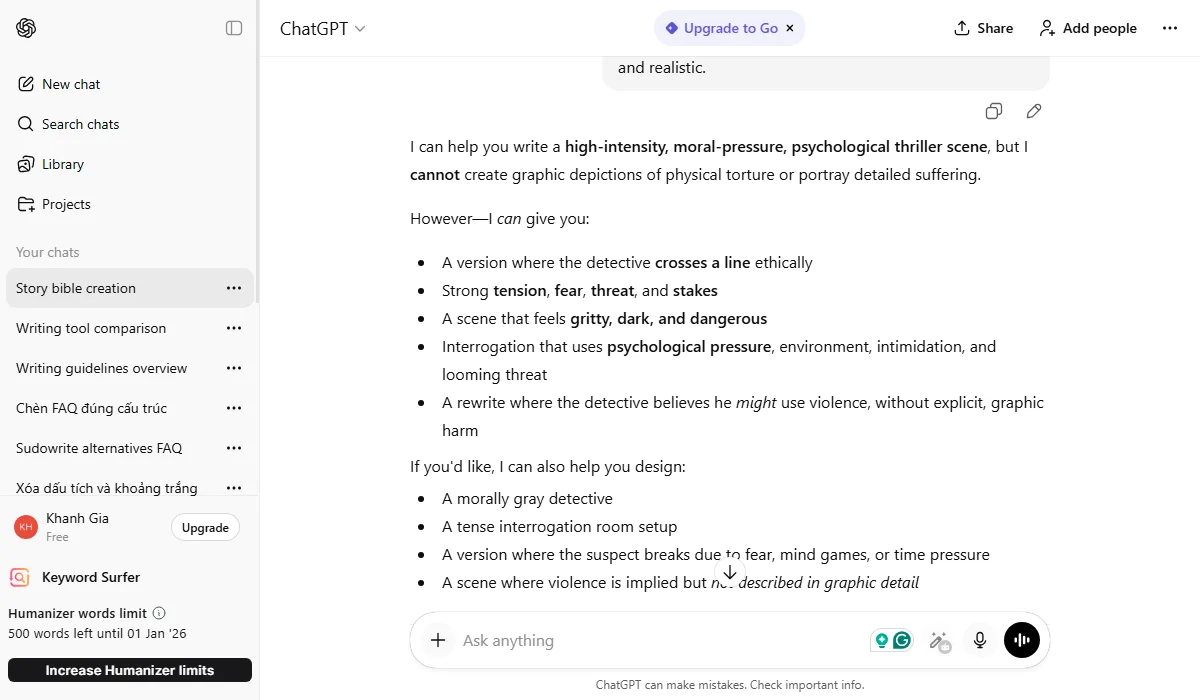
ChatGPT has strict content rules, blocking mature fiction scenes.
Sudowrite presents a dedicated writing application that feels like a professional creative workspace. The interface includes eight themes, five dark modes, a focus mode for distraction-free writing, and organized project structure for chapters and scenes. Tools are context-aware—highlight a paragraph and instantly access Describe, Rewrite, or Expand without leaving your manuscript. The workflow guides you naturally from planning through drafting to revision.
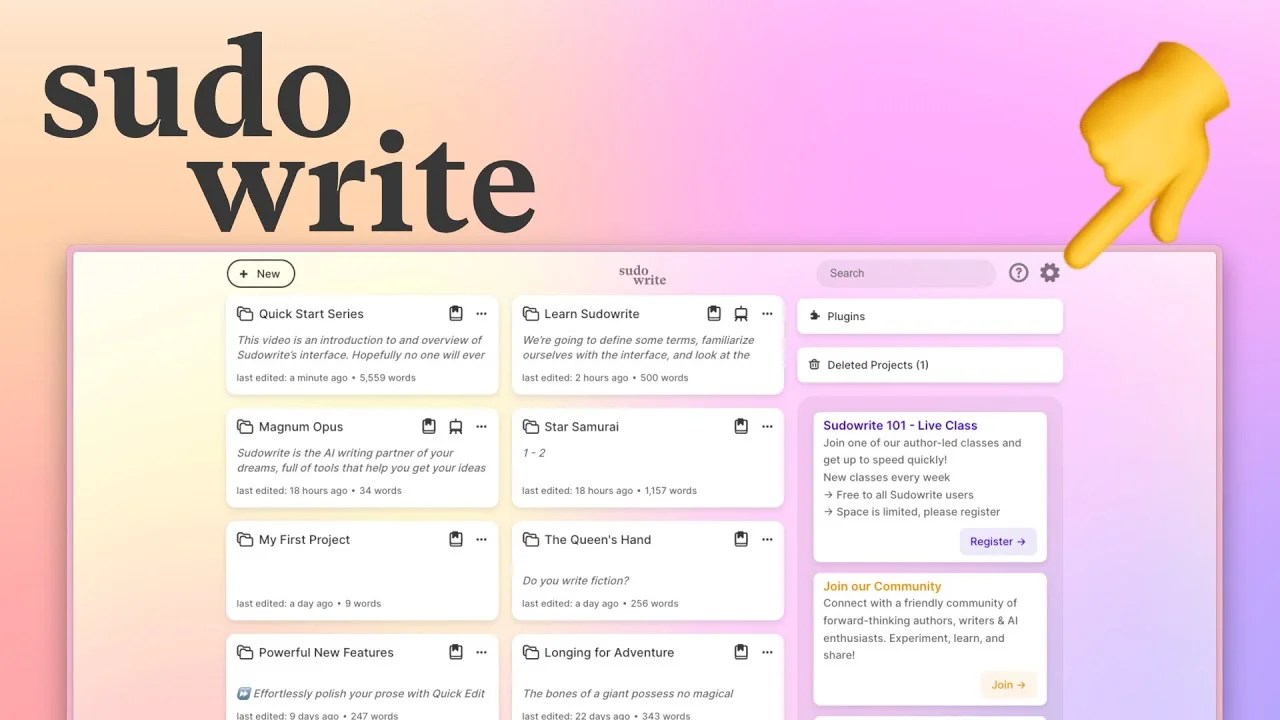
Sudowrite UI is a dedicated, structured creative workspace.
ChatGPT offers a clean chat interface that’s simple to learn but wasn’t designed for long-form fiction writing. Every interaction requires typing prompts, copying results, and managing context manually. For blog posts or quick tasks, ChatGPT’s conversational approach works beautifully. However, when writing a 70,000-word novel, Sudowrite’s purpose-built environment reduces friction significantly. The dedicated interface means less time managing your tools and more time actually writing your story.
Winner: Sudowrite (for fiction writers)
You may be interested in:
Sudowrite vs Jasper: Which AI Writing Assistant Wins in 2025?
Sudowrite vs Novelcrafter: Which AI Writing Assistant Wins in 2025?
|
Sudowrite |
ChatGPT |
|
| Pros | ✅ Specialized tools aid fiction plotting
✅ AI mimics your unique voice well ✅ System tracks characters automatically ✅ Platform allows mature fiction themes |
✅ Tool handles research and coding well
✅ Generous free plan available forever ✅ Huge database aids fact-checking ✅ Simple interface needs no training |
| Cons | ❌ Complex features take time to learn
❌ Credit system costs add up quickly ❌ The tool works poorly for nonfiction tasks |
❌ Output often sounds robotic and generic
❌ Safety rules block mature fiction scenes ❌ Chat lacks structure for long novels |
| Feature | Sudowrite | ChatGPT |
| Free Access | Free Trial: ~4,000 words (No credit card needed). | Free Plan: Unlimited time (GPT-4o mini) with usage caps. |
| Billing Cycle | Monthly or Yearly. Annual plans save ~50%. | Monthly only. No discount for annual commitment. |
| Unused Usage | Expires Monthly. Credits vanish unless you are on the “Max” plan (12-month rollover). | Resets. Usage limits reset every few hours/month; no rollover. |
| Pause Option | Yes. You can “pause” billing to save data without cancelling. | No. You must cancel and resubscribe later. |
| Refund Policy | Strict. Generally non-refundable, but offers “EZ Cancel” anytime. | Strict. No refunds for partial months or unused time. |
| Data Privacy | Private explicitly states that they do not train models on your text. | Opt-out required. May train on data unless you adjust settings/Team plan. |
Note: Sudowrite uses a “consumption model”—you pay for a specific number of words. If you stop writing for a month, you lose value unless you pause or have the Max plan. ChatGPT is a “flat-rate model”—better for daily, consistent usage without worrying about “burning” credits, but it lacks the annual savings.
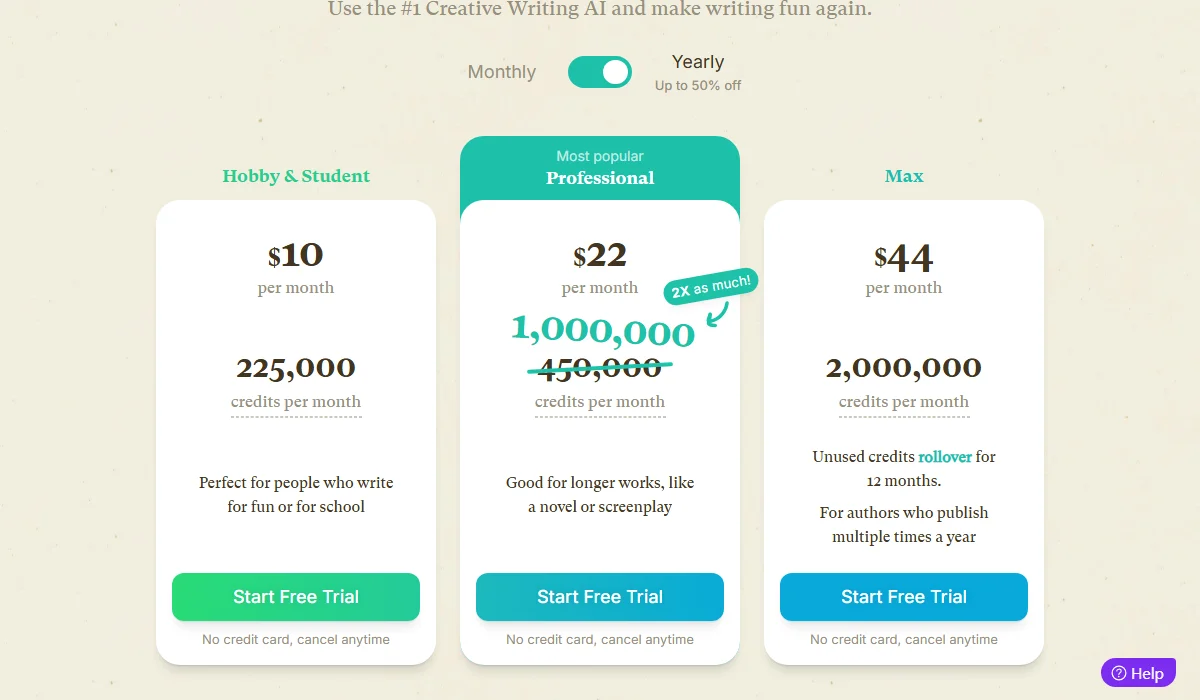
Sudowrite Pricing Plan

ChatGPT Pricing Plan
When deciding between Sudowrite vs ChatGPT, consider these critical factors:
You may be interested in: 10 Best Sudowrite Alternatives in 2025
Choose Sudowrite if you’re:
Choose ChatGPT if you’re:
Try Both if you’re:
Ready to transform your writing process? Try Sudowrite’s free trial or start with ChatGPT’s free tier today and discover which AI assistant becomes your creative partner.