As content writers, we often face a blank screen with a deadline approaching and are stuck on which tool to use. This time, we’re comparing two major ones: Anyword and Writesonic.
Both platforms promise to improve our workflows, but our team tested them for weeks on real projects to see which actually delivers.
In this in-depth Anyword vs Writesonic comparison, we’ll share our honest findings. We’ll cover content creation, unique SEO tools, brand voice, and the real pricing. Let’s find your team’s next AI partner.
Before the detailed breakdown, here’s the fast answer from our team:
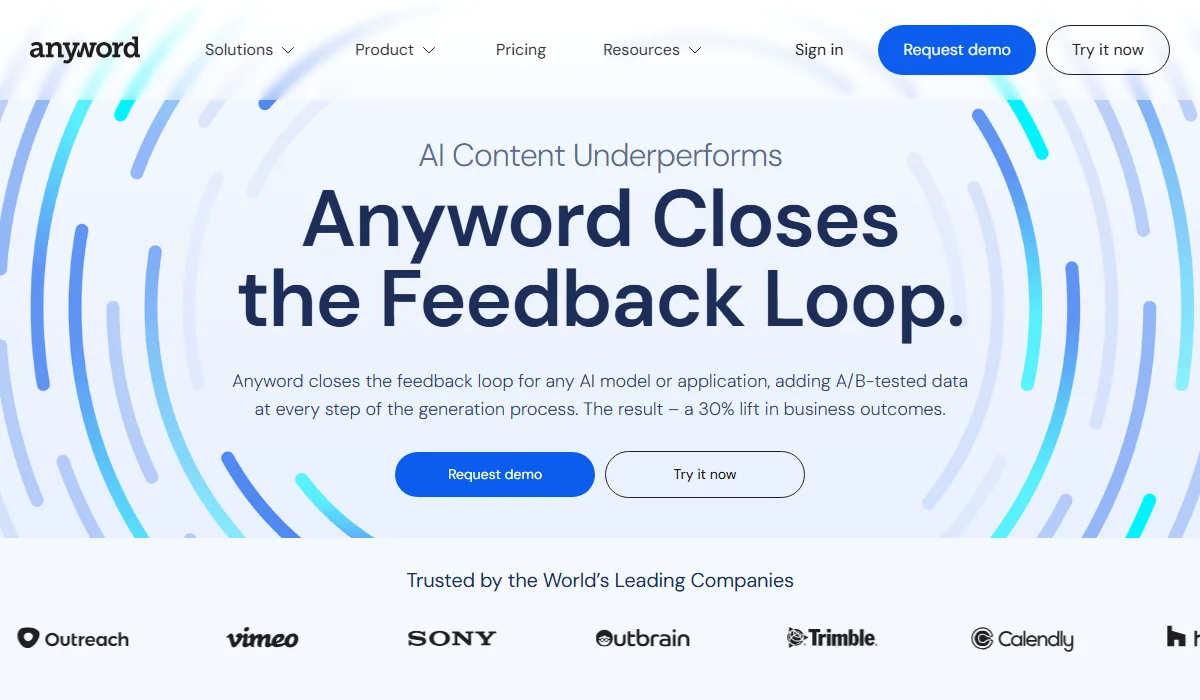
Anyword focuses on high-conversion AI copywriting
Logging into Anyword, we immediately understood its focus. This isn’t just a blog writing tool; it’s a data-driven AI copywriting platform. Founded in 2013, its main purpose is analyzing millions of marketing messages to predict what will work.
Anyword is all about creating high-converting copy for ads, emails, and social media. Exploring the over 100 marketing templates, it was clear that this tool is built to help marketing teams stop guessing with A/B tests and start boosting conversion rates.
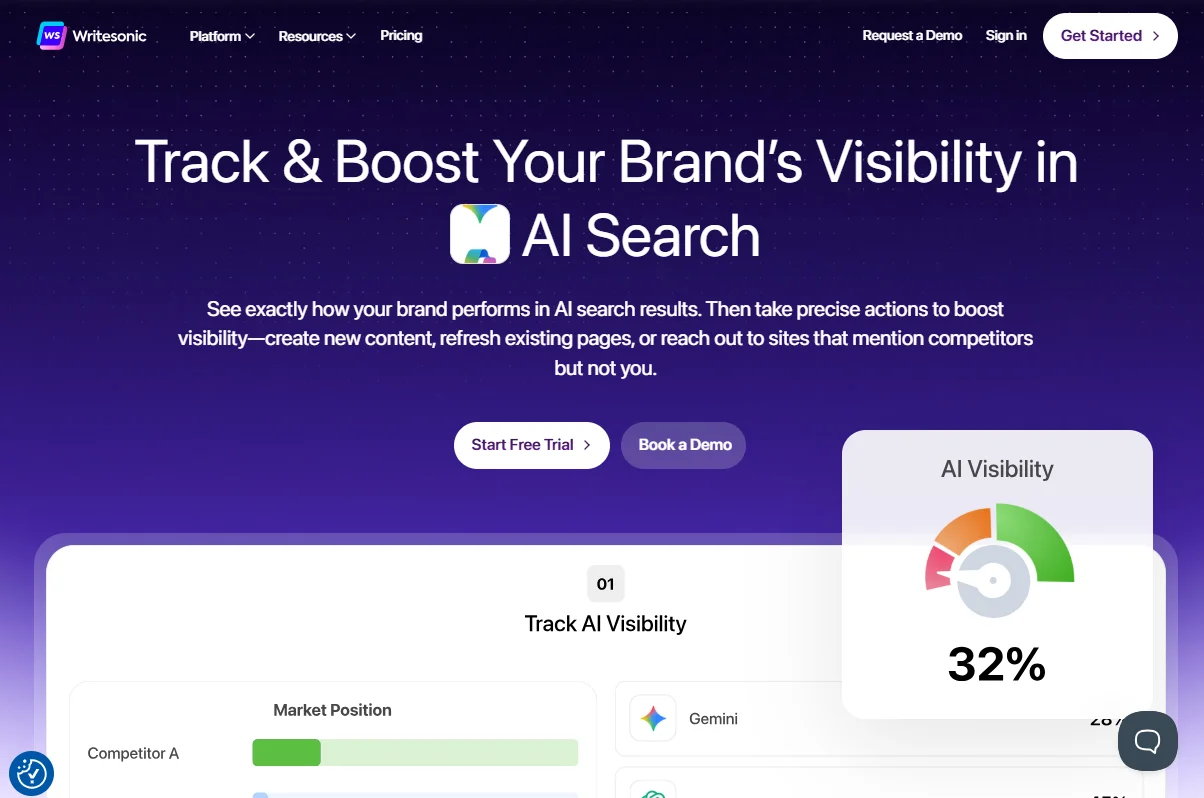
Writesonic excels in SEO and high-volume content creation
Writesonic felt like a perfect fit for our content team. Launched in 2020, it’s clearly an AI content creation and SEO optimization platform designed for writers who need high-volume, search-friendly content.
We were impressed by its ability to generate 1,500+ word blog posts from a simple prompt, delivering a solid first draft in seconds. While it has over 90 templates, our team agreed its real power is the comprehensive SEO tools. What really got our attention? It tracks how your brand appears in AI search results on ChatGPT and Perplexity.
We found Writesonic to be an “all-in-one” platform for content production. Its flagship tool, the AI Article Writer (v6.0), genuinely impressed us. When tested on a complex topic, it quickly produced a long-form article (the docs say 500-5,000 words) using real-time data and citations. For our blogging work, that’s a massive win. We also noted its 80+ content templates cover everything from e-commerce to social media.
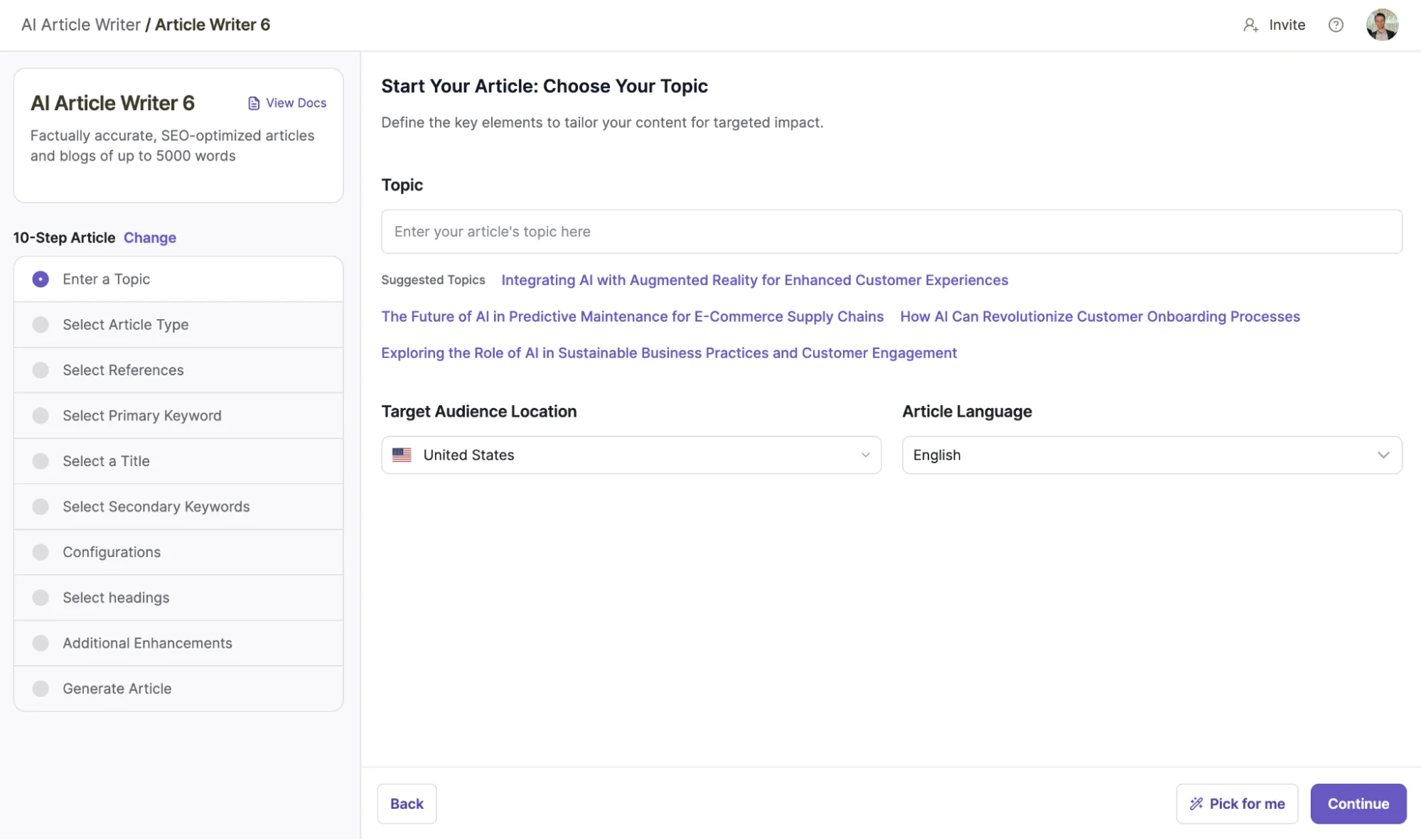
Writesonic’s AI Article Writer generates long-form content efficiently
Anyword is a pure specialist in conversion. The tool’s focus is clearly on high-stakes marketing copy. We found a huge range of templates for Ad Copy (Facebook, Google), Email Copy (subject lines, drips), and Landing Page headlines/CTAs. While it does have a Blog Wizard for long-form, our experience showed this wasn’t the main focus. The tool’s brilliance shines when you’re writing short, performance-driven copy.
The “winner” depends entirely on what kind of content you create. If your job is long-form blogs, Writesonic wins. If your job is short-form ads and email, Anyword wins.
Winner: Tie
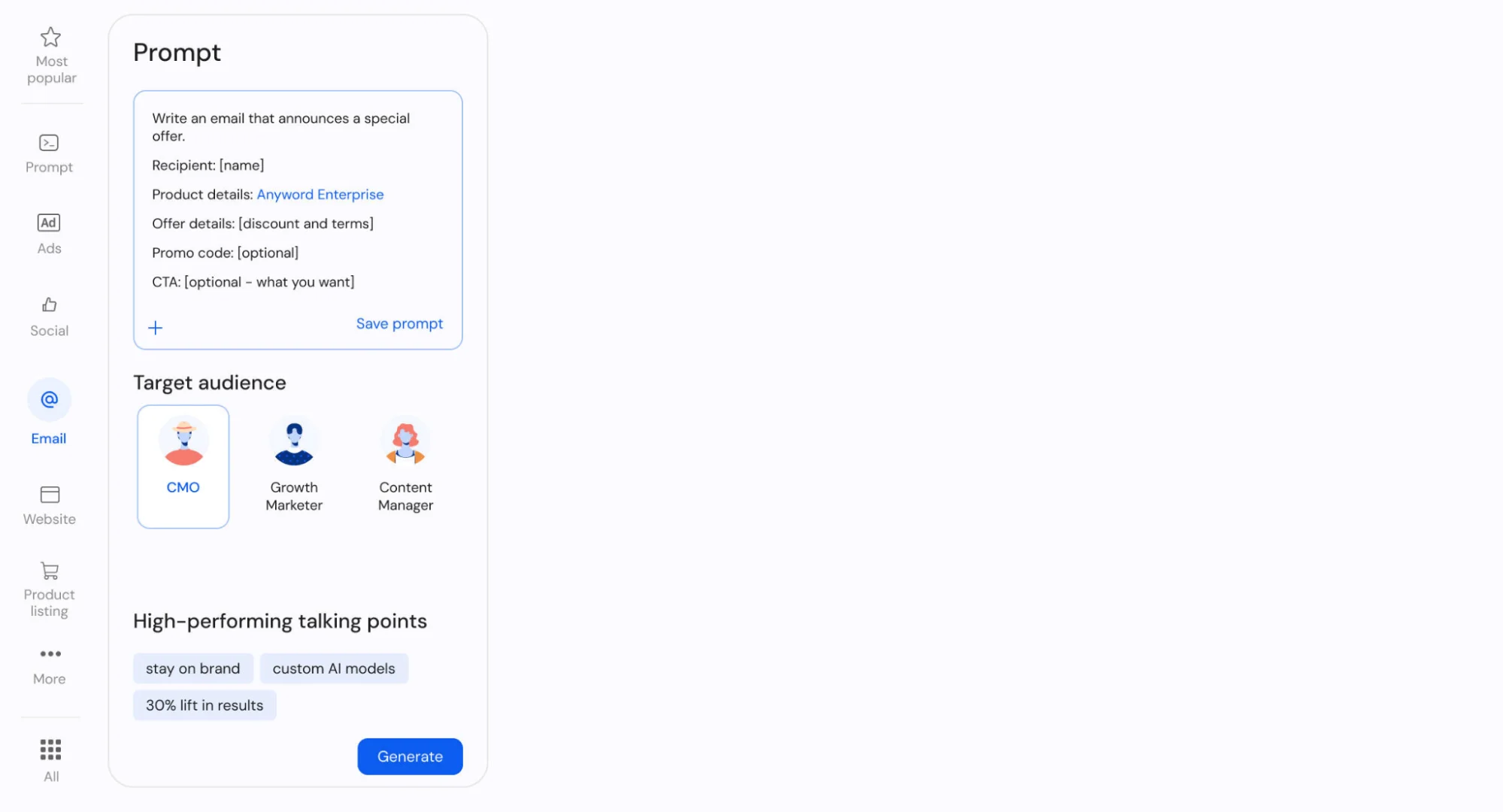
Anyword excels at short-form, conversion-focused copy
Anyword does have SEO features, but they are focused entirely on on-page content optimization. Inside its Blog Wizard and Data-Driven Editor, we could add target keywords and related keywords. The system then gives a live SEO score and feedback as you write, and it also includes a plagiarism checker.
Anyword’s most unique angle is using its Predictive Performance Score to optimize headlines and meta descriptions, aiming to improve your Click-Through Rate (CTR) from search results.

Anyword offers on-page SEO tools with performance scoring
Writesonic, on the other hand, is a much more comprehensive SEO suite. It has everything Anyword does (like an SEO checker and plagiarism checker) but adds a complete workflow. We found a built-in keyword research tool, topic clustering, and even an AI agent for SEO that runs technical site audits.
Furthermore, Writesonic’s integrations with Google Search Console, Ahrefs, and Surfer SEO show it’s built for a serious, data-driven SEO strategy, not just optimizing one article.
This is an easy win for Writesonic. Anyword helps you optimize a single post. Writesonic helps you manage an entire SEO strategy.
Winner: Writesonic
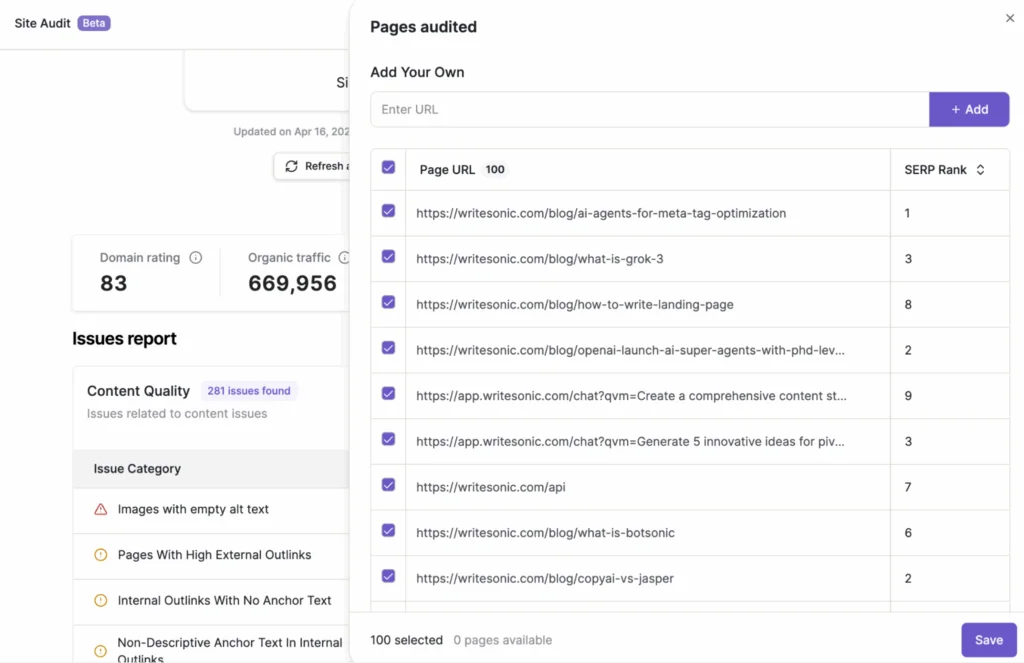
Writesonic provides a full SEO suite with deep integrations
We found Writesonic’s feature to be practical and straightforward. You can train it to match your style by “Add a link,” “Add some text,” or “Upload a file.” This “helpful sidekick” approach works perfectly for a solo writer needing the AI to learn their style quickly.
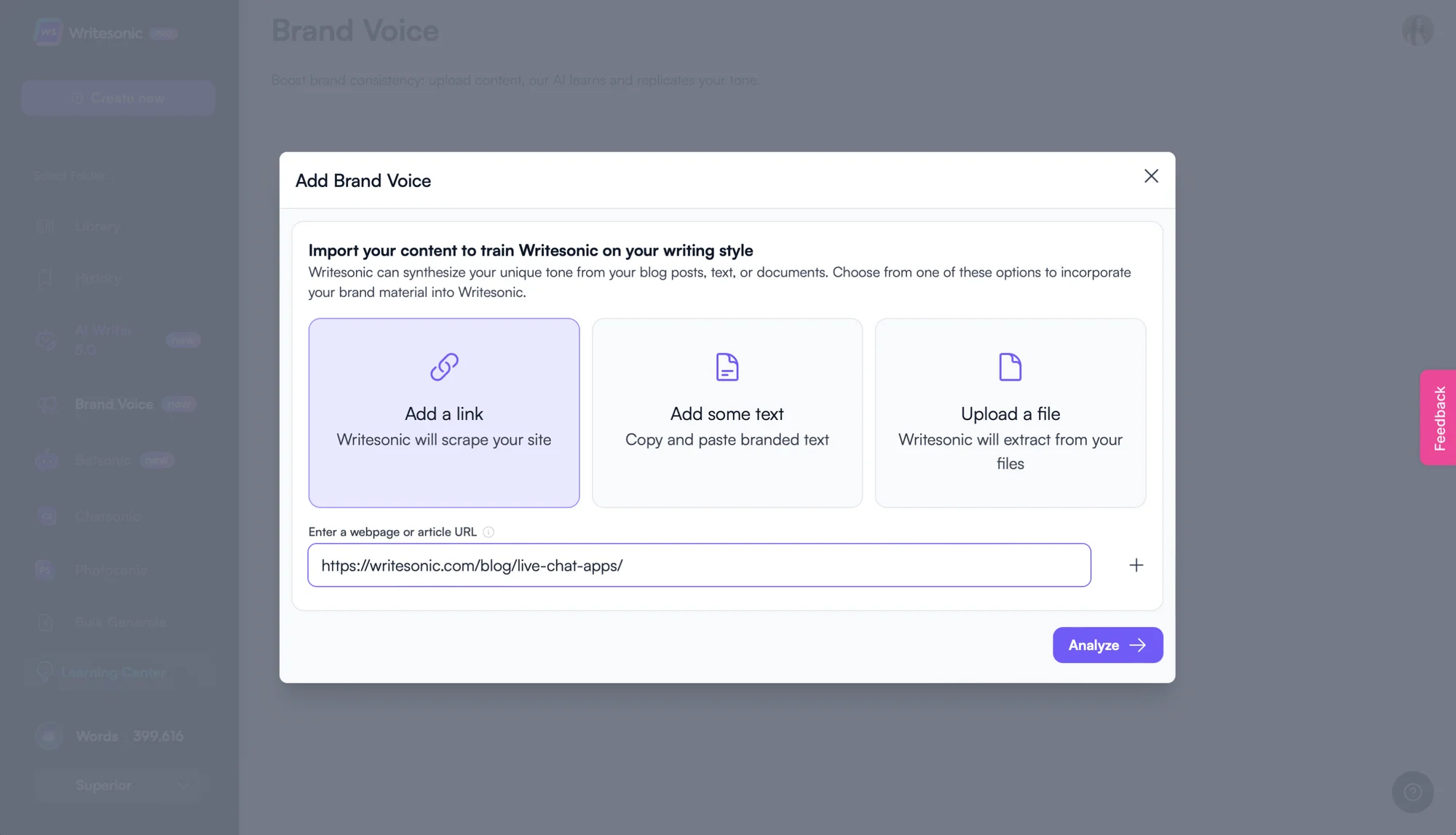
Writesonic easily adapts to your writing style
Anyword, however, focuses on management and performance, reflecting its “data-driven” brand voice. The system goes beyond mimicking a style; it’s built to manage it. We successfully built a centralized messaging system complete with detailed audience personas and brand voice guidelines (specific tones, rules, and examples).

Anyword manages brand voice with data-driven precision.
For our team, Anyword’s “expert partner” system is a clear advantage. It ensures everyone, from junior writers to managers, generates copy from the same set of rules—a must-have for ensuring consistency across multiple client accounts.
Winner: Anyword
Anyword’s unique strength is its Predictive Performance Scoring. We consider this its killer feature. It gives your copy a numerical score, predicting its ability to convert a specific audience with a claimed 82% accuracy. This allows you to optimize copy before spending money.
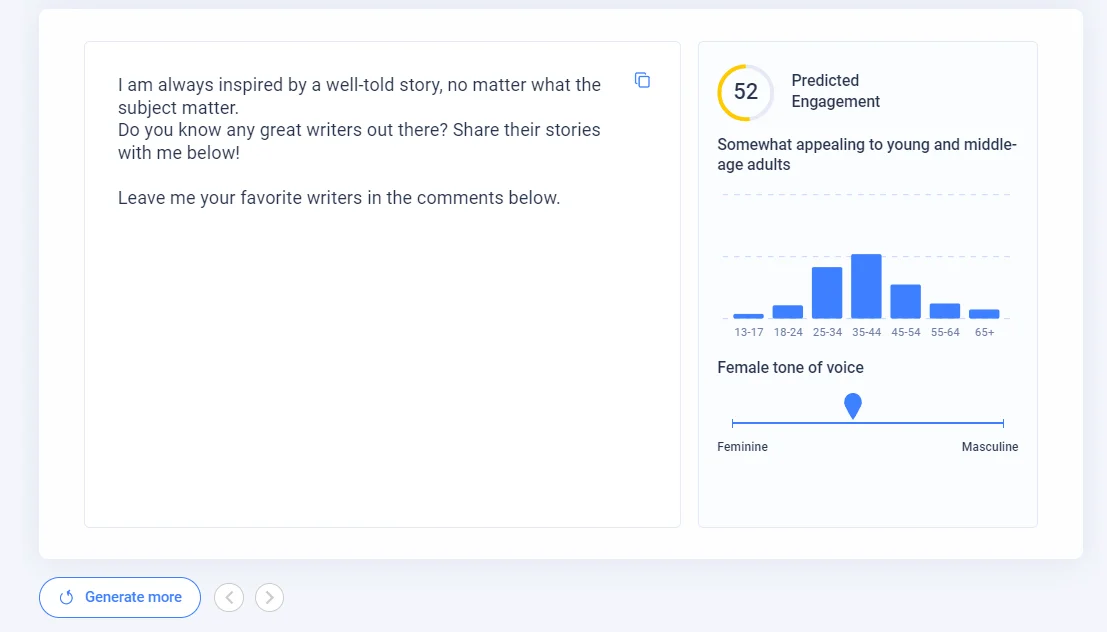
Predictive Performance Scoring boosts conversion accuracy
Writesonic offers something very forward-thinking: AI Search Visibility Tracking. This was the first tool our team has seen that monitors how your brand is mentioned in AI chatbots like ChatGPT and Perplexity. It then reports on your brand’s sentiment in this new “AI search” era, which really impressed us.
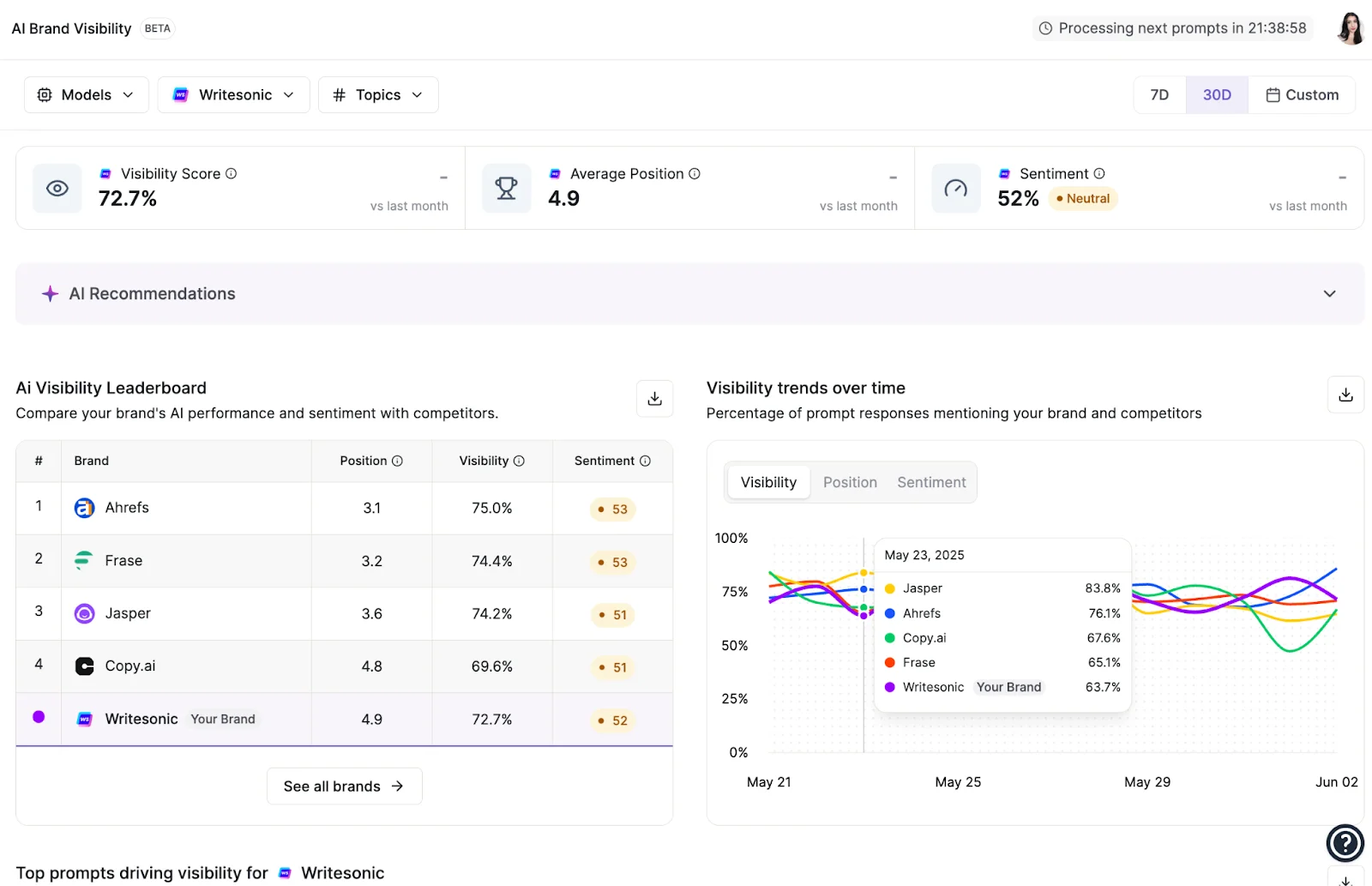
Innovative AI Search Visibility Tracking monitors brand mentions
We’re calling this a tie. Both features are brilliant but serve completely different goals. The “winner” depends on your goals.
Winner: Tie
Our initial impression of Anyword was mistaken. It’s not a closed system; it’s just built for a different audience. Anyword has powerful, deep integrations with enterprise-level tools like Salesforce, HubSpot, Marketo, and various ad platforms (Google Ads, Meta Ads, and LinkedIn Ads). It also features a Chrome Extension and connections for Google Drive and Microsoft Word.
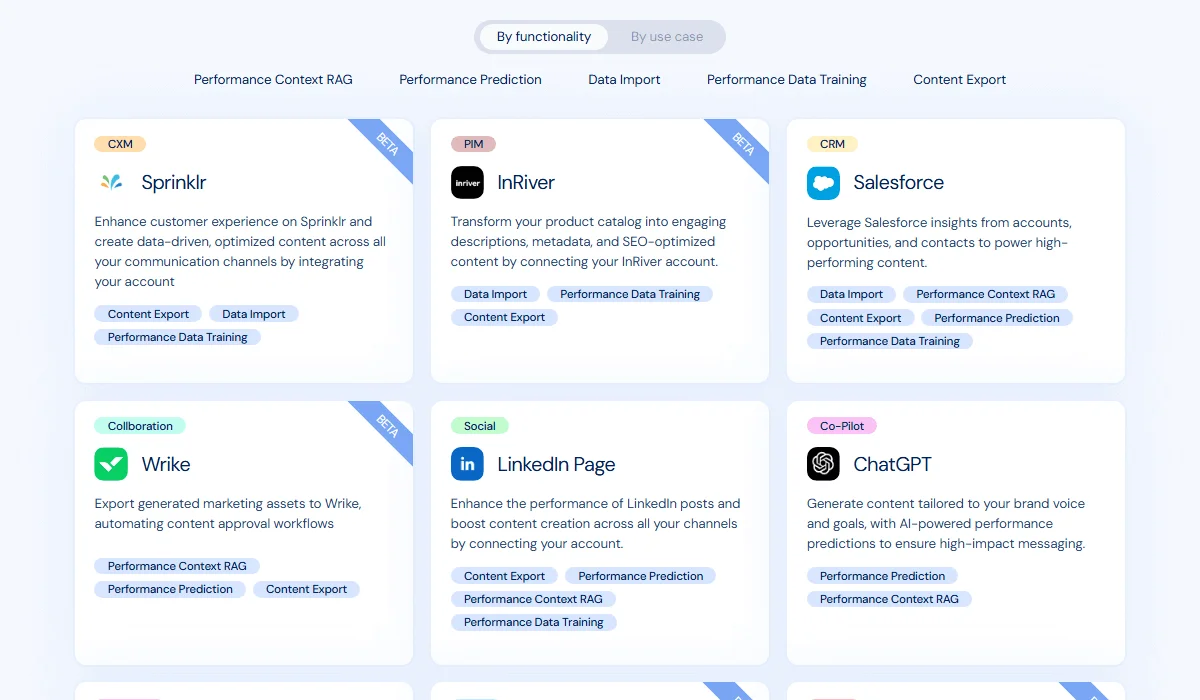
Anyword integrates deeply with enterprise marketing tools
However, for our team’s workflow (content writers and bloggers), Writesonic felt far more seamless. It connects to the tools we use daily. The direct WordPress integration (a true 1-click publish) is a massive time-saver. Critically, Writesonic also has broad Zapier support, which lets it connect to thousands of other apps.
This is not a clear win for either side. The “winner” completely depends on your job. Anyword’s integrations are clearly stronger for a corporate performance marketing team. Writesonic’s integrations are much more practical for content creators and bloggers.
Winner: Tie (It depends on your need)
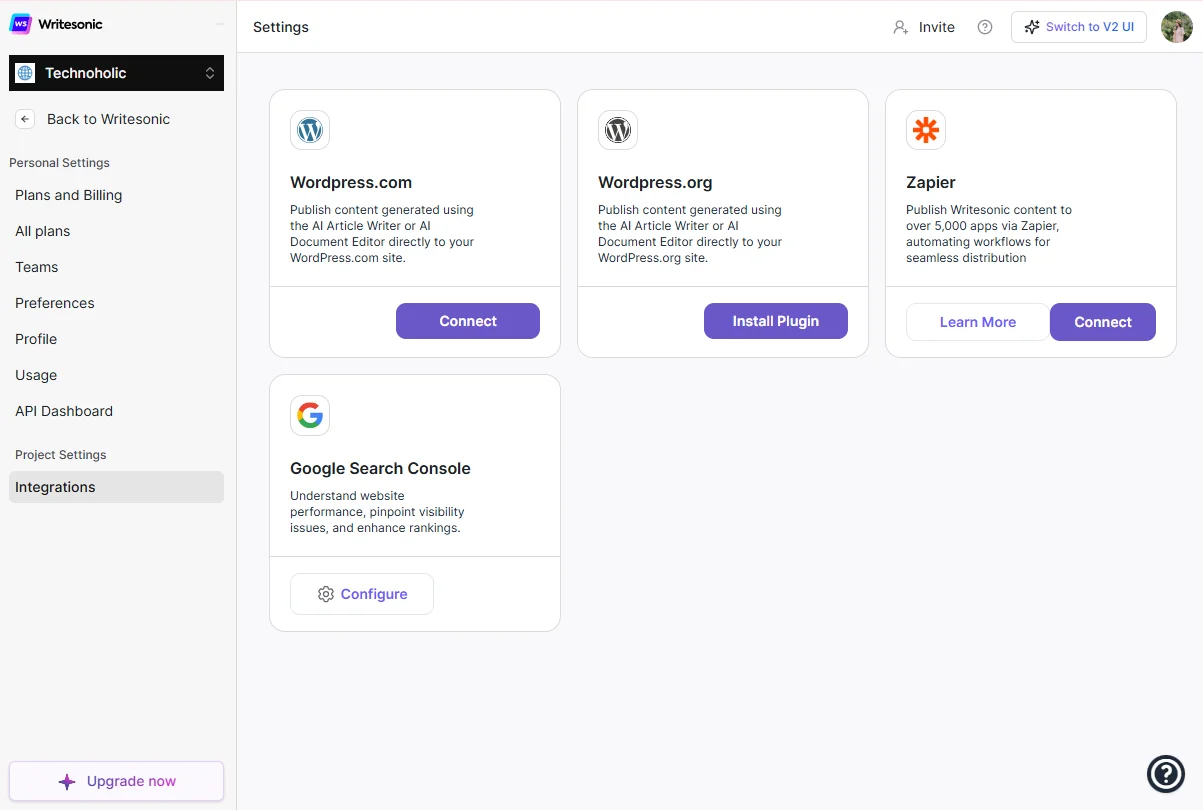
Writesonic streamlines content workflows with key integrations
You may be interested in:
Anyword vs ChatGPT: Which is the best for Writers in 2025?
Anyword vs Copy.ai: Which is the best for Writers in 2025?
Here’s a quick breakdown of what we liked and disliked.
| Anyword | Writesonic | |
| Pros | ✅ 82% performance prediction accuracy ✅ Centralized brand voice management for teams ✅ Perfect for ad copy, email, & landing pages ✅ Deep integrations for enterprise (Salesforce, HubSpot) |
✅ Excellent long-form (1,500+ word) articles ✅ Comprehensive SEO suite ✅ Strong integrations for content creators (WordPress, Zapier) ✅ Tracks ChatGPT, Perplexity visibility |
| Cons | ❌ Weak long-form content generation ❌ No landing page builder ❌ Limited SEO tools ❌ Lacks content creator integrations (WordPress, Zapier) ❌ No AI search visibility tracking |
❌ No predictive analytics for conversion ❌ Less advanced voice controls ❌ Marketing copy isn’t the main strength ❌ Fewer enterprise-level integrations (Salesforce, Marketo) |
Now, let’s talk pricing. The starting price can be misleading.
| Aspect | Anyword | Writesonic |
| Free Version | 7-day free trial (2,500 credits) | Free Plan (limited features/words) |
| Credit Card for Trial? | No | No |
| Annual Discount | Yes (Pay for 10 months, get 12) | Yes (Up to 33% savings) |
| Pricing Model | Seat-based. The “Data-Driven” plan includes 3 seats. | Word-based. Primarily charged by word count. Seats are extra. |
| Word/Credit Rollover | No. Credits and data rows reset monthly. | Yes. Unused words (from monthly plans) roll over to the next month. |
| Word Generation Limit | Unlimited copy generation on all paid plans. | Credit-based. Word count varies by plan and quality (e.g., Premium/Superior). |
| Cancellation Policy | Cancel anytime. Access continues until the billing period ends. | Cancel anytime. Access continues until the billing period ends. |
| Refund Policy | No Refunds | Yes (7-day). Must be requested, and usage limits apply. |
| Key insight | You must buy the $79/month (billed annually) “Data-Driven” plan to get the main feature: Predictive Performance Scoring. | You must buy the $199/month (billed annually) “Professional” plan to get the main feature: AI Search Visibility Tracking. |
Our main lesson: Both tools lock their best features behind more expensive plans. Factor this into your budget.
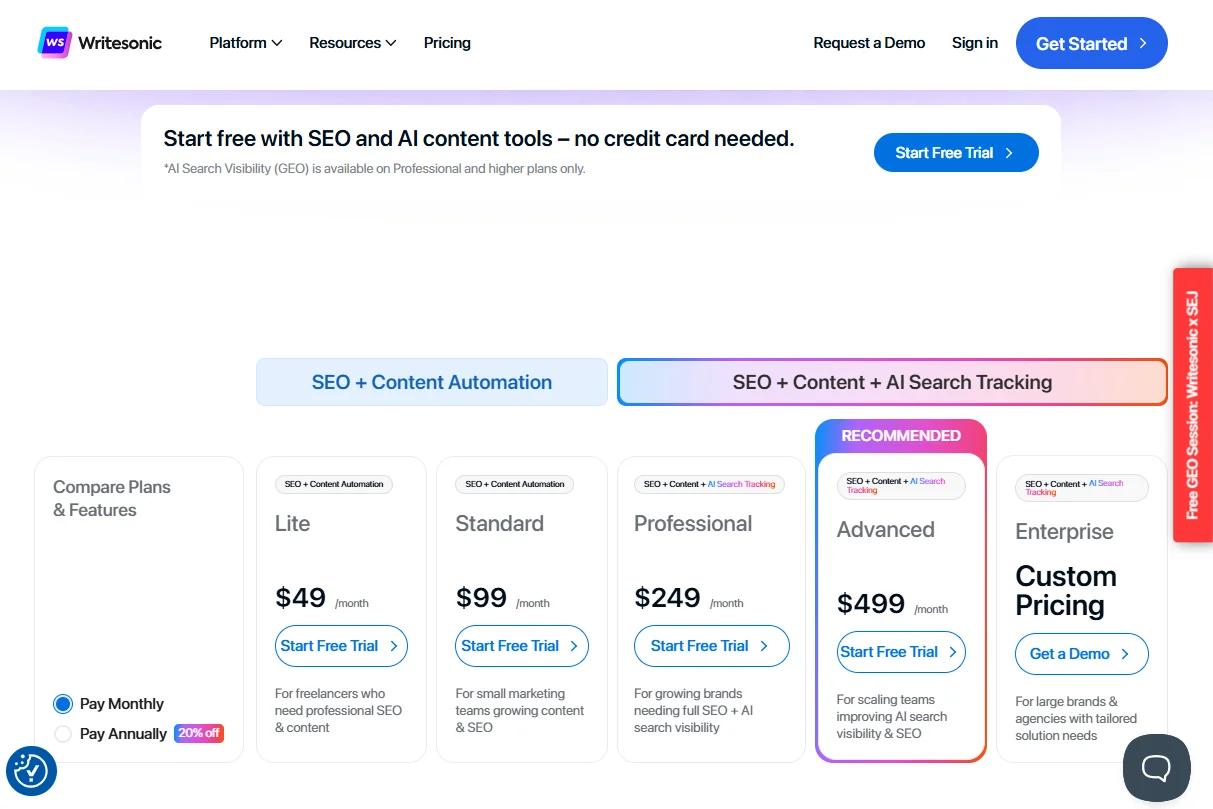
Writesonic Pricing Plan
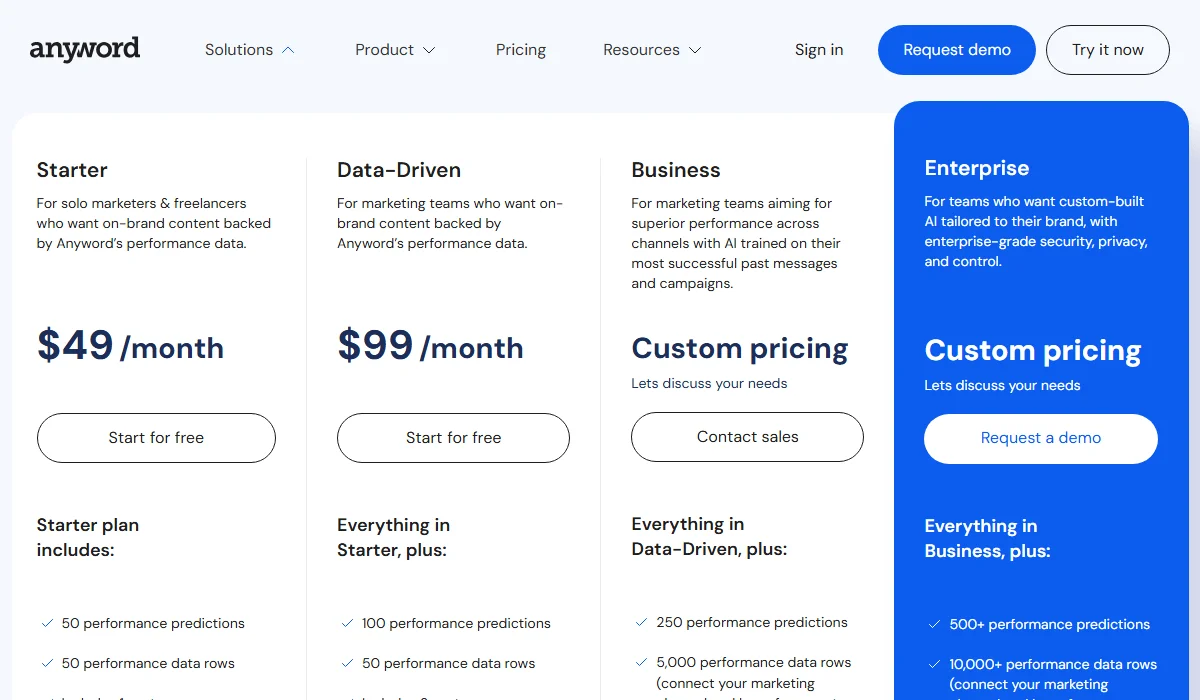
Anyword Pricing Plan
Here’s the checklist our team uses before starting any free trial:
You may be interested in:
Anyword vs Jasper: Which is the best for Writers in 2025?
Anyword vs Outranking: Which is the best for Writers in 2025?
After extensive testing, the choice is clear and depends entirely on your job.
Choose Anyword if you’re:
Choose Writesonic if you’re:
You may be interested in:
Anyword vs Rytr: Which is the best for Writers in 2025?
Frase vs Writesonic: Which Tool Wins for SEO Writers? [2025]